















EagletVision Group Conducts Lithium-Ion Battery Safety Training to Strengthen Factory Risk Management
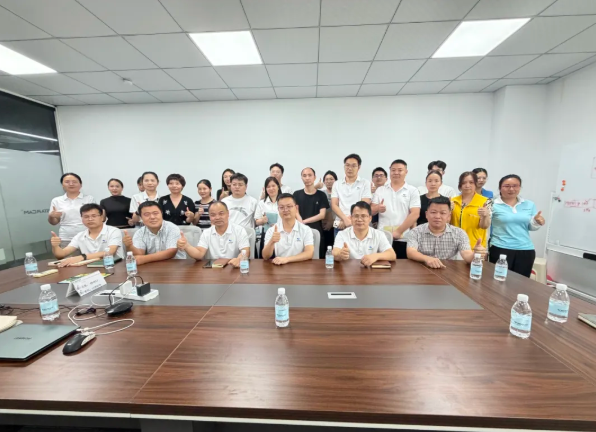
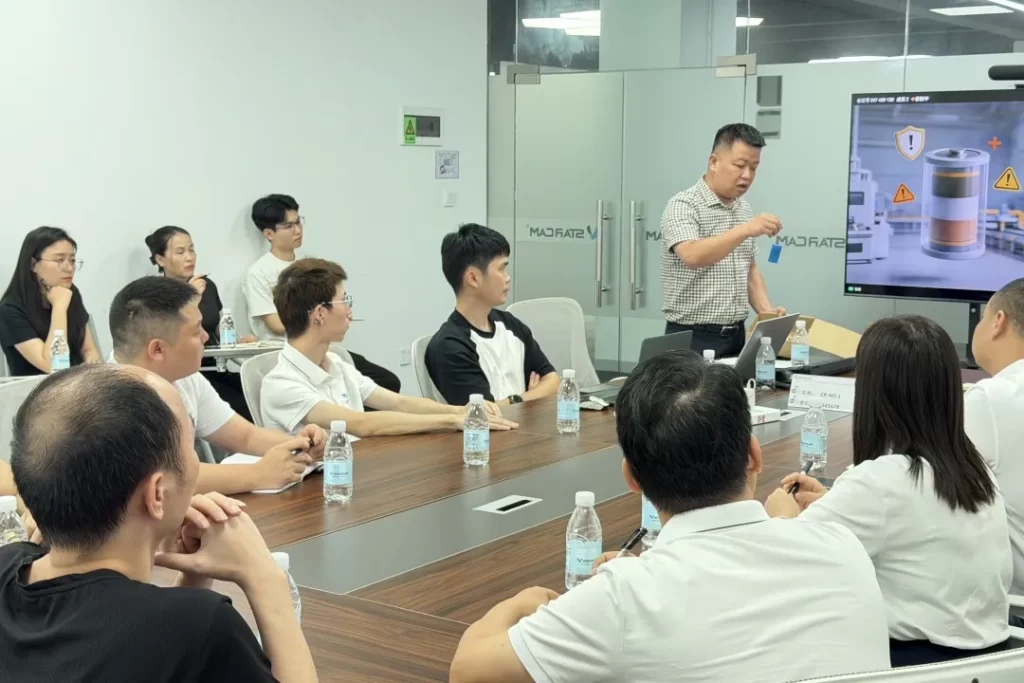
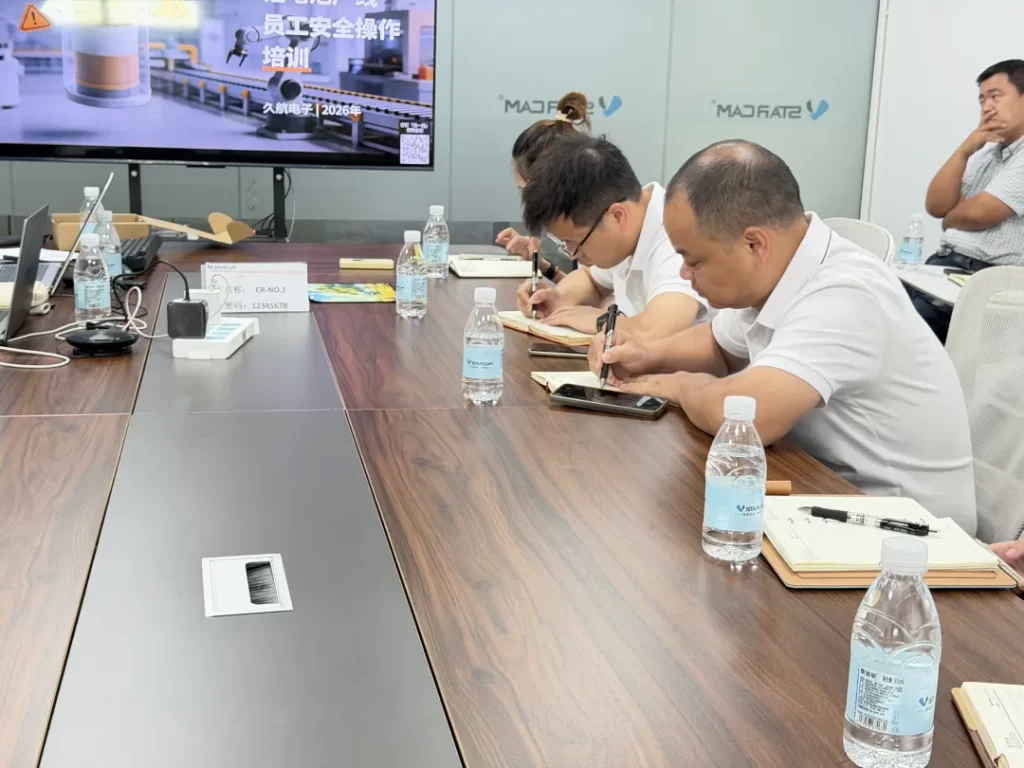
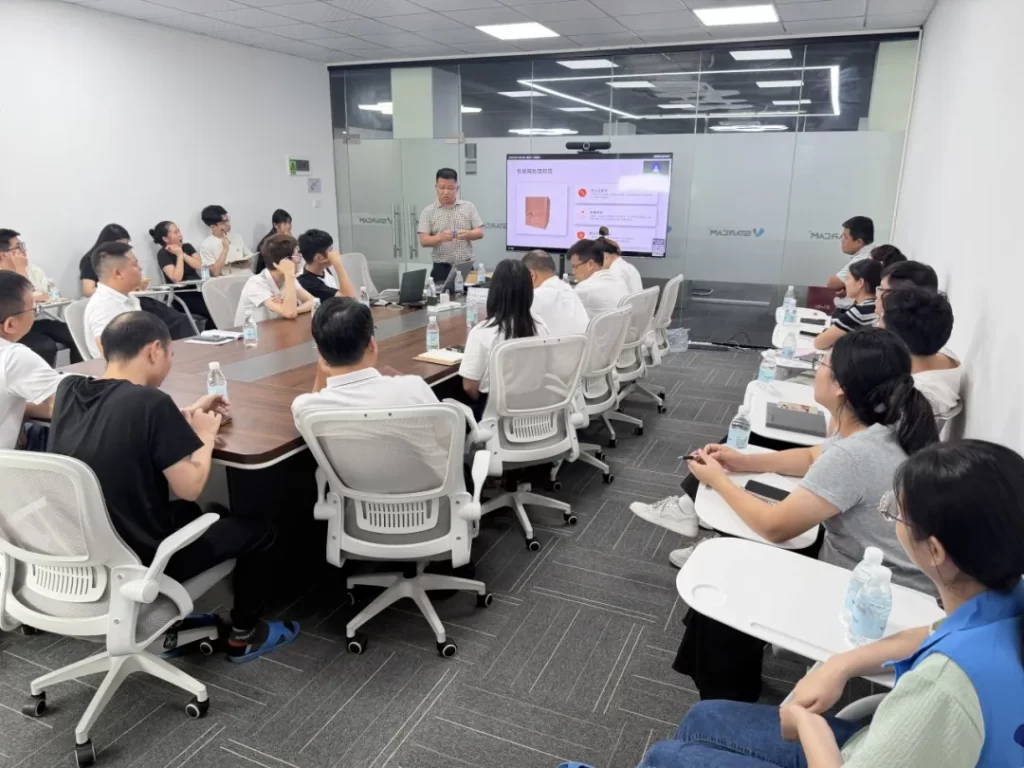
To strengthen lithium-ion battery safety and standardize workshop workflows, EagletVision Group hosted a specialized safety training session at its Shiyan Manufacturing Base on the afternoon of May 26. The program aimed to enhance frontline employees’ ability to identify battery anomalies and respond to emergencies. Led by expert instructors from Shenzhen Jiuhang Electronics, the session drew over 30 participants, including department heads, assembly line operators, testing personnel, warehouse staff, and quality control (QC) specialists.
Part 1: Four Core Modules for Operational Safety
The comprehensive training focused on full-cycle battery safety management, divided into four key modules:
- Pre-Production Handling: Standard procedures for box handling, unpacking, transport, storage, and anomaly management.
- Emergency Response: Proper use of specialized firefighting equipment, emergency protocols, and personal protective equipment (PPE) deployment.
- Charging Safety: Current and voltage limits, environmental controls, and risk avoidance.
- Discharging Safety: Cutoff parameter thresholds, prohibited operational practices, and full-process monitoring.
During the session, the instructors analyzed real-world industry accidents to illustrate standard operating procedures (SOPs) for handling, moving, and storing batteries on the production line.
Part 2: Hands-On Drills to Boost Emergency Readiness
Explaining the structural characteristics and thermal runaway mechanisms of lithium-ion batteries, the instructors detailed standard pre-production workflows.
For emergency management, they demonstrated the proper use of specialized equipment like fire blankets and fire sand. They introduced a strict three-step emergency routine: “Cut off power, Isolate, and Report.” Instructors explicitly warned that conventional water-based fire extinguishers must never be used on lithium battery fires.
Addressing critical charging and discharging stages, the instructors provided precise operational parameters. For a nominal 3.7V lithium battery, the maximum cutoff voltage must be kept at 4.2V, with the charging current restricted between 0.2C and 0.5C. Discharging must strictly follow preset voltage and current limits to completely eliminate dangerous behaviors such as overcharging, over-discharging, overloading, and short circuits.
The team also participated in live drills, practicing how to properly don PPE—including insulating gloves, high-temperature face shields, respirators, flame-retardant clothing, and anti-slip safety shoes. Employees simulated responses to overheating and smoking batteries, mastering the core protocol: “Immediate detection, immediate isolation, and immediate reporting.”
The training yielded immediate results. “I used to panic when a battery started smoking,” shared a line operator. “Now I know exactly how to isolate it with a fire blanket and follow the reporting protocol. I feel much more confident.”
Part 3: Strengthening Systems for Long-Term Safety
Workplace safety is the lifeblood of corporate development. Moving forward, the Shiyan Manufacturing Base will use this training as a stepping stone to continuously refine its end-to-end lithium battery safety management system. Through regular drills and performance evaluations, EagletVision Group will further upgrade its workforce’s safety literacy and emergency responsiveness, building a secure foundation for high-quality, sustainable growth.